6 min read
Are AI Calorie Trackers Accurate?
Are AI calorie trackers accurate? Mostly close, but photo apps tend to underestimate meals by 250-345 calories, mostly from hidden fat.
The TrackMyCalorie team
Short answer: AI calorie trackers are useful but not exact, and they tend to underestimate rather than overestimate. A 2026 study led by researchers at the US National Institutes of Health, reported by Healio, found that photo-based calorie apps undercounted meals by roughly 250 to 345 calories, and most of that miss came from one place: fat. If you want to know whether you can trust the number on the screen, the honest answer is "roughly, if you understand what it gets wrong." Let me explain why, and how to get more out of it.
How accurate are AI calorie trackers, really?
For everyday tracking, modern AI estimators get you in the right postcode. Point a camera at a plate of chicken and rice and a good model will recognise the foods and give you a sensible estimate. For a food logged by barcode or chosen from a verified database, the number is as accurate as that database, which is to say very.
The weak spot is portion size and, above all, hidden fat. The NIH-led work found the typical photo estimate landed 250 to 345 calories low on a meal. That is not a rounding error; on a 600-calorie lunch, it is a third of the meal. Crucially, the error was not random. It leaned consistently in one direction, under, and it traced back to the oil, butter and dressing a camera simply cannot see.
So "accurate" is the wrong yes-or-no question. The better framing is: AI trackers are consistent and convenient, with a known blind spot you can learn to correct for.
Why they underestimate: the hidden fat problem
Here is the core issue, and it is worth understanding with real numbers.
Imagine a plate of grilled chicken and rice. From our food database, a medium chicken breast is about 250 calories and a cup of cooked white rice is about 210. An AI looking at the photo sees chicken and rice and might log around 460 calories. Reasonable, right?
But that chicken was cooked in two tablespoons of oil. From the same database, a tablespoon of oil is about 126 calories, so that is roughly 252 calories the camera never saw, sitting invisibly in and on the food. The real plate is closer to 710 calories. The AI's 460 is not a crazy guess; it is a good guess about the parts it can see, missing the parts it cannot. And that missing 250-ish calories is almost exactly the gap the NIH researchers measured.
This is why the error is so stubborn. Oil, butter, dressings and cooking fats are calorie-dense and visually hidden. A drizzle of olive oil weighs almost nothing and shows up as a faint sheen, yet it can add more calories than a second helping of the vegetables underneath it.
Where AI gets it right
None of this means AI logging is a gimmick. It is genuinely good at several things.
Recognising foods. Modern models identify what is on a plate reliably, which removes the biggest chore of tracking: finding the right database entry.
Branded and barcoded items. Scan a packet and there is no estimation at all; you get the manufacturer's own figures. That is the most accurate logging there is.
Consistency. Even when an estimate is a little off, it tends to be off in the same way each time. If you always track the same lunch and it always reads a bit low, the trend, which is what matters for weight change, is still honest.
Speed. The best tracker is the one you actually use. An AI estimate in three seconds beats a perfect manual entry you skip because it is tedious.
How to make AI estimates more accurate
You can close most of the gap with a few habits.
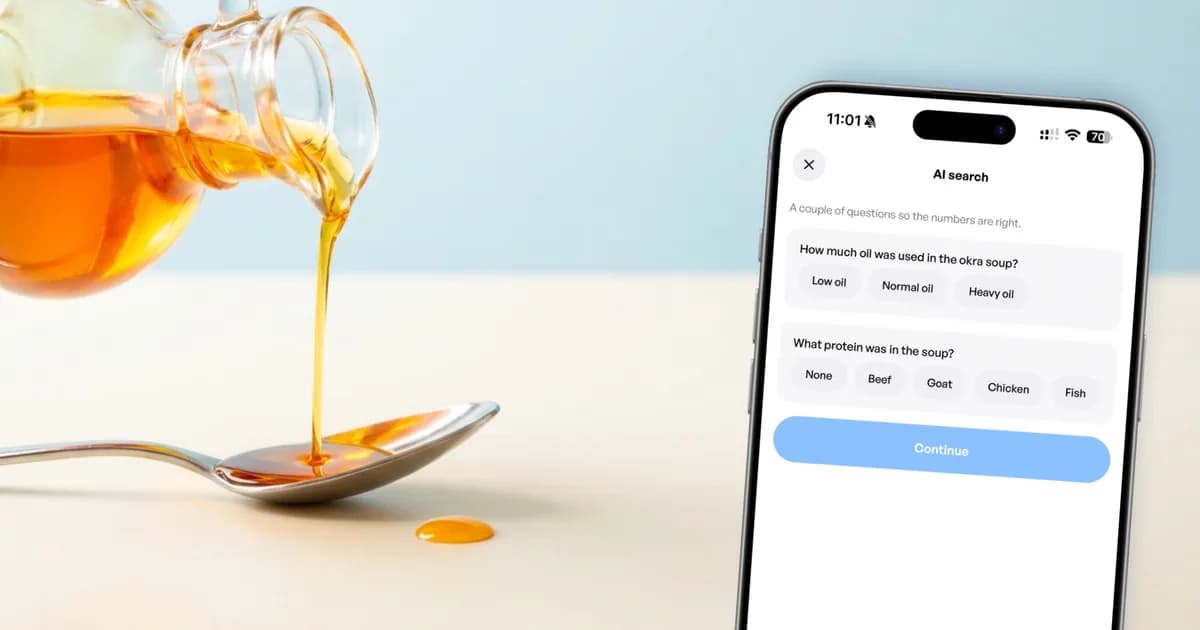
- Tell it about the oil. The single biggest win. If a dish was fried, sautéed or dressed, say so. This is exactly why TrackMyCalorie's logger states the oil assumption it is using and lets you change it, instead of quietly guessing low.
- Log the cooking fat separately. If you cooked in oil or butter, add it as its own line. It is the one thing the camera will always miss.
- Scan when you can. For anything with a barcode, scan it. That turns an estimate into a fact.
- Give portions a reference. A hand, a fork, or the plate itself in the shot helps the model judge size. "Half portion" or "large bowl" in a note helps even more.
- Be consistent. Track the same way every day. A steady small error still gives you a trustworthy trend line.
The TrackMyCalorie approach
We built our logger to start from verified data, not guesswork. When you log a meal, the AI matches each food to our food database, which is built on USDA FoodData Central for generic foods and FatSecret for branded and restaurant items, and takes the calories and macros straight from those verified entries. It only falls back to an estimate when a food, or a home-cooked dish, genuinely is not in the database, and even then it breaks the dish into database ingredients rather than inventing a figure.
Where some judgement is unavoidable, in the portion size and the cooking oil, it shows its working instead of quietly guessing low. For an oily dish it asks how much oil was used when the answer would change the calories by a meaningful amount, and it states the assumptions it made so you can correct them. You can log by photo, by barcode, or by typing a plain sentence like "500g of jollof rice with low oil," and wherever the food exists in our database, the numbers come from that verified data, not a guess.
The goal is not a figure plucked from thin air. It is real, database-backed nutrition where we have it, and honest, adjustable estimates only where we do not, logged in seconds. Pair that with our calorie calculator for your daily target and the trend takes care of itself.
People Also Ask
Do AI calorie counters overestimate or underestimate?
They usually underestimate. Research on photo-based apps found they undercounted meals by roughly 250 to 345 calories, mostly because cameras cannot see the oil, butter and dressing in a dish. Telling the app about cooking fat closes most of that gap.
Can you trust AI to count calories?
You can trust it for a consistent, close estimate, not a to-the-calorie figure. It is excellent for barcoded foods and for recognising what is on your plate, and reliable enough for tracking trends over time, as long as you account for hidden fats.
How can I make calorie tracking more accurate?
Scan barcodes when you can, log cooking oil and butter separately, give the app a sense of portion size, and tell it how a dish was cooked. Consistency matters more than perfection; a steady small error still shows an honest trend.
The bottom line
AI calorie trackers are close and convenient, with one known flaw: they underestimate meals, usually by 250 to 345 calories, because they cannot see hidden fat. Understand that, tell the app about the oil, scan what you can, and the number becomes genuinely useful. An honest estimate you adjust beats a perfect one you never log.
Want a tracker that shows its work instead of guessing low? Log your next meal with TrackMyCalorie — snap a photo, scan a barcode, or type it in, and see exactly what it assumed.