5 min read
Rotisserie Chicken Nutrition & Calories
Rotisserie chicken nutrition: a 3oz serving is about 170 calories with skin, 140 without. See breast, thigh and drumstick, plus protein.
The TrackMyCalorie team
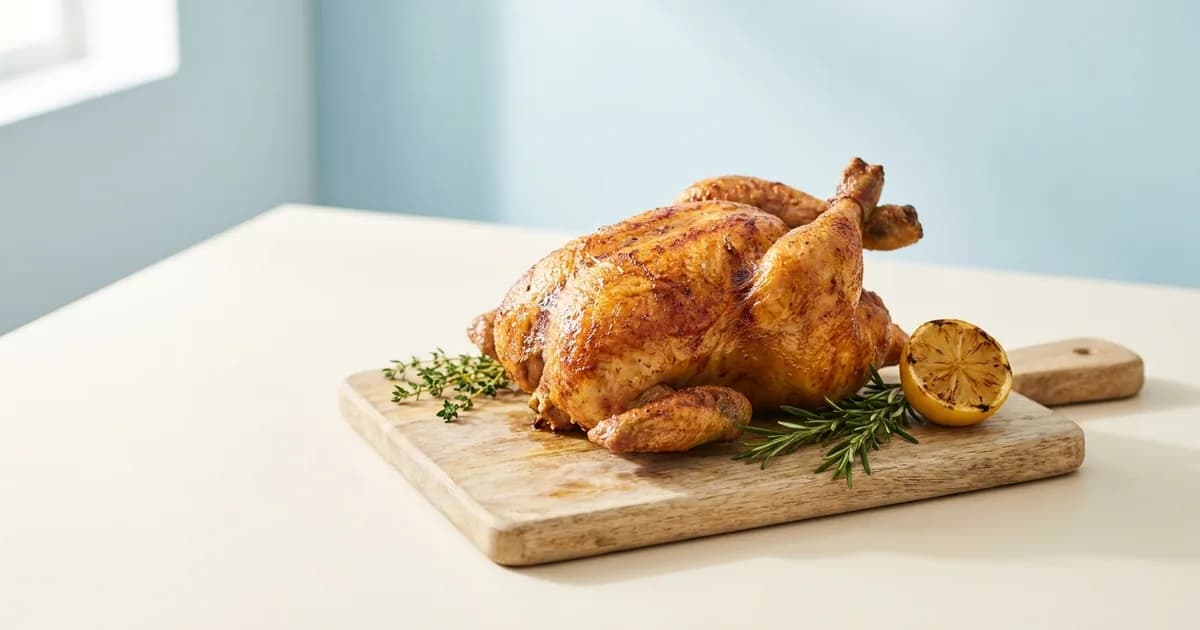
A 3-ounce serving of rotisserie chicken, about 85 grams, has roughly 170 calories with the skin or about 140 without. A whole breast is around 250, a thigh 185, and a drumstick 114. Rotisserie chicken is one of the best protein buys going: cheap, cooked, and packed with protein for not many calories, as long as you know what the skin adds. Here is the full breakdown.
Rotisserie chicken calories by part
From our food database, built on USDA FoodData Central. These are roasted chicken pieces eaten with the skin.
| Part (roasted, with skin) | Weight | Calories | Protein | Fat |
|---|---|---|---|---|
| Breast | 130 g | 250 | 34 g | 11 g |
| Thigh | 80 g | 185 | 19 g | 12 g |
| Drumstick | 60 g | 114 | 14 g | 6 g |
| 3 oz serving, with skin | 85 g | 173 | — | — |
| 3 oz serving, skinless | 85 g | 140 | — | — |
Nutrition data: USDA FoodData Central via the TrackMyCalorie food database.
The breast is the leanest per gram and the protein champion: a single breast delivers around 34 grams. Dark meat, the thigh and drumstick, is a little higher in fat and a little richer in flavour. All of it is a strong protein-to-calorie trade, which is why rotisserie chicken is a meal-prep staple for anyone counting macros.
The skin is the main lever
If you want to move a rotisserie chicken's calories, the skin is where you do it. Removing the skin drops a serving from about 170 calories to about 140, and the fat falls with it, because the crispy skin is mostly fat. The protein barely changes.
So the choice is simple and personal. Keep the skin for flavour and a few more calories, or pull it off for a leaner plate. On a breast, skinless is the leanest high-protein option on the whole bird. On the thigh and drumstick, the skin makes a bigger difference because there is more of it relative to the meat. Neither is wrong; just log the version you actually eat, because the gap is real.
White meat vs dark meat
White meat (the breast) is leaner, with more protein per calorie. Dark meat (thighs and drumsticks) carries more fat, which makes it juicier and, to a lot of people, tastier. The calorie difference per bite is modest, so this is more about preference and goals than a big nutritional divide.
If you are chasing maximum protein for minimum calories, skinless breast wins. If you want flavour and you are not sweating every calorie, dark meat is a perfectly good choice. A mix of both across the week keeps meal prep from getting boring, which matters more for sticking to a plan than squeezing out the last few calories.
One watch-out: the sodium
Store-bought rotisserie chickens are often brined or seasoned, which makes them delicious and also salty. The calories and protein above are about the chicken itself; the sodium in a seasoned supermarket bird can be high. If you are watching your salt, that is the thing to keep an eye on, not the calories. Rinsing is not really an option, so just factor it in, and go easy on any salty sides.
How rotisserie chicken fits your day
On a 2,000-calorie day, a skinless breast at around 250 calories buys you a third of many people's daily protein target for an eighth of their calories. That is an excellent trade, and it is why rotisserie chicken is a go-to for anyone trying to eat more protein without more calories. Shred it over a salad, stuff it in a wrap, or pair it with vegetables and a starch for a balanced plate.
Work out your own protein and calorie targets with our calorie calculator, then log the chicken by part and by weight. For a fried-chicken comparison, our breakdown of Popeyes nutrition shows how much the breading and frying add on top of the same bird.
People Also Ask
Is rotisserie chicken healthy?
Yes, it is one of the easier healthy convenience foods. It is high in protein and reasonable in calories, especially skinless. The main watch-out is the sodium in seasoned store-bought birds, so pair it with low-salt sides if you are keeping an eye on salt.
How many calories are in a rotisserie chicken breast?
About 250 calories for a whole breast eaten with the skin, with roughly 34 grams of protein. Skinless, it drops lower while keeping almost all the protein, which makes it one of the leanest high-protein options around.
Is rotisserie chicken good for weight loss?
Very. The high protein keeps you full, it needs no cooking, and removing the skin trims the calories further without touching the protein. Just mind the sodium and the calorie-heavy sides, and the chicken itself is a weight-loss friend.
The bottom line
Rotisserie chicken is about 170 calories a serving with skin and 140 without, with a breast near 250 and loads of protein throughout. The skin is your main calorie lever, white meat is leanest, and the sodium is the thing to watch in a store-bought bird. Log the part you eat and it is one of the best-value foods you can track.
Prepping with a rotisserie bird? Log each serving in seconds with TrackMyCalorie — search it, or snap a photo and let the app sort the protein and calories.